A Photo Boucle Bouclé
Provence, July, 1971.

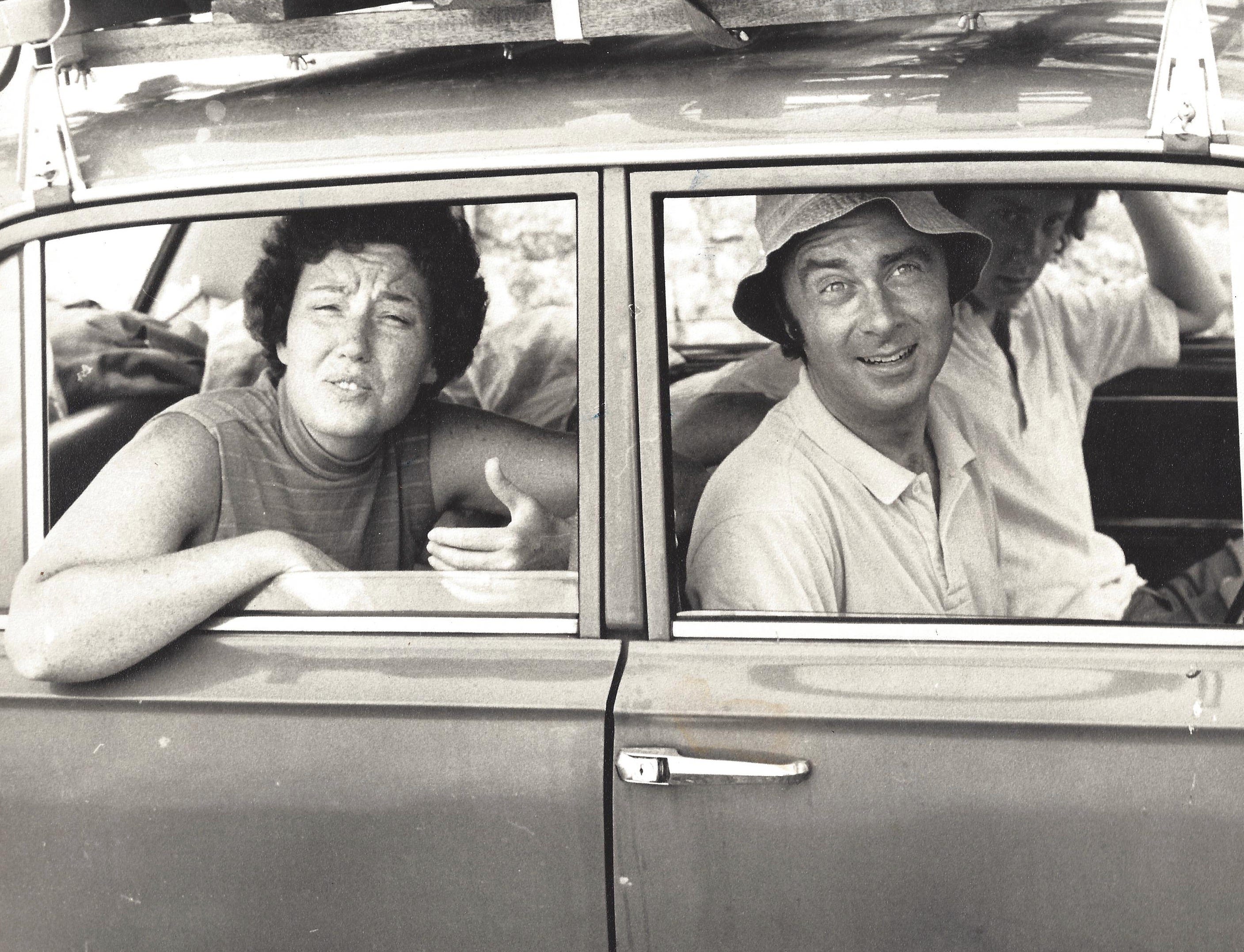
My parents, Uzés, France, July 1971.
Fifty-two years ago, in July, a family friend photographed my parents and I look at the image daily. I too am in the car, our family’s green Fiat 124, left-hand drive, as we prepare to depart Kenneth Sinclair’s house in a medieval village outside the market town of Uzés in Provence. I can find Uzés on the map, but I’ve forgotten the name of the village. Aureillac? Bourdic? If not the name, the pictures persist in my mind’s eye. My first trip to France, I was fifteen. Tenth grade loomed.
In the photo, my mother is speaking. She has the gesture and facial expression of a French word or sentence. Dad looks amused. I am obscured in the front passenger seat; my sister behind me. The car is packed and we are taking our leave for the next phase of summer vacation: onward to Switzerland, then Paris.
We had stayed in the little stone village for two weeks. The shards of memory—the madeleines of sensory experience—linger still. Why do our brains stash the slant of light, fragrances, tastes, sounds of particular moments—these, not those—in such random files, for retrieval….when? All these years later the experiences are vivid, poignant, pungent.
We had arrived in France from London on the car ferry from Dover to Calais, then an overnight train to Avignon, our car loaded onto the train behind the sleeping and dining cars. The memory begins with the hericots verts and my entrecote garni, frites. The waiters were crisp and efficient, in white jackets, popping wine bottle corks, delivering drinks, dinners and desserts, as our ears labored to decipher the chatter around us and to make known our dining choices. Mom—the only one with adequate French vocabulary— took charge. She relished the role, as we clattered southbound through the night.
By dawn, we had pulled into Avignon. The autos were unloaded by a crew of grand prix drivers who sprinted back and forth between cars stacked on the train, and parking lot where we took possession of our voiture. It was a goat rodeo. Off we drove, back on our native right side of the road, but now driving a left-hand drive Fiat made for Britain. “Drive Right,” my parents chanted like a mantra.
Our friend’s renovated farmhouse in a hill top village awaited. It had modern plumbing, spacious bedrooms, and shade from the hot, dry Provençal sun. We discovered the scorpions several days after arrival when we finally perused the instructions for visitors. Sure enough, shaking out your shoes was a good idea each morning. For some reason, I recall the local plumbers called to fix a water supply malfunction. Plumber French is the same as English: “Ça marche, Bruno?” “Non! Pas encore.” They yelled from beneath the sink to the other working the source.
Vocabulary and visions kept expanding. Citron Pressé in the café, Cachou licorice beads, ripe peaches, baguettes and local honey; the shade of the sycamores lining the town square; the older men playing boule in the afternoons, sipping pastis, the heavy metal balls clinking at the end of a roll eliciting their guttural exclamations—the dappled light, the stark éclair de midi, the softening dusk. We met the head of the local WWII resistance, who had the bearing of De Gaulle, scars, and the deference of his community.
We went swimming in the River Gard where it had carved a meandering sluice through a rock garden surrounded by a bamboo forest—cool, shady, delightful. I discovered Asterix le Gaul comics and spent languorous hours on the sofa reading them in French. Solzhenitsyn too, for some reason. More shards: pizza in brick ovens. More Entrecote et frites. An Opinel jackknife.
After two weeks, it was time to move on. We loaded up, bid adieu to Mr. Sinclair. He snapped the evocative photo. Weeks later our trip ended in Paris where we stayed in Hotel Esmeralda, Rue St. Julien le Pauvre, adjacent to Shakespeare and Company of 1920s expat American writer-fame; across the river from Notre Dame, on the Left Bank—which I revisited in 2007 with my wife and daughters for a couple of nights. The guidebook called it “Shabby chic.” It was both. Mais, ça marche. Boucler la bouclé, as the French say—of life and lives and locations.
Todd R. Nelson lives in Penobscot, Maine. His books of essays are published by Down East Books.
[1] Castine Patriot, Weekly Packet, September 14, 2023.
Thanks a million for that snapshot of that special moment-the photo and the writing!